

The argument that Linux represents the future of computing technology is not a prediction so much as an observation of what has already happened. Linux does not merely power a significant portion of the world’s servers — it powers the overwhelming majority of them, running the backend infrastructure of companies like Google, Amazon, Facebook, and virtually every major cloud provider on the planet. The Android operating system, which runs on roughly three quarters of the world’s smartphones, is built on a Linux kernel, meaning that more human beings interact with Linux daily than with any other operating system ever created. The world’s five hundred most powerful supercomputers run Linux without exception, as does the International Space Station, the Large Hadron Collider, and an increasing share of the embedded systems controlling everything from automobiles to medical devices to industrial machinery. This dominance did not happen by accident or by marketing — it happened because Linux proved itself in the most demanding computing environments imaginable and kept proving itself decade after decade until its position became essentially unassailable. The future of computing infrastructure is not going to Linux; it already arrived there, quietly and completely, while most desktop users were looking elsewhere.
Linux is the future of computing technology due to its open-source nature, which allows for high customization and flexibility. Its strong security features and low maintenance requirements make it an ideal choice for developers and businesses alike.
The emergence of the cloud as the dominant model of computing delivery has cemented Linux’s position in ways that are difficult to overstate. Every major cloud platform — Amazon Web Services, Google Cloud, Microsoft Azure — runs its core infrastructure on Linux, and the containerization revolution led by Docker and orchestrated by Kubernetes is a Linux-native phenomenon built on kernel features like namespaces and control groups that have no meaningful equivalent on other operating systems. The rise of edge computing, which pushes processing power out of centralized data centers and into devices closer to where data is generated, favors Linux overwhelmingly because its small footprint, configurability, and open license make it ideal for deployment on constrained hardware at massive scale. Artificial intelligence and machine learning workloads — arguably the most consequential new category of computing to emerge in a generation — run almost exclusively on Linux, both because the major frameworks like TensorFlow and PyTorch are developed primarily on Linux and because the GPU clusters that train large models are managed by Linux systems. As computing continues its migration away from personal devices and toward distributed, cloud-native, and AI-driven architectures, every one of those trends runs directly through Linux, reinforcing its centrality rather than threatening it.
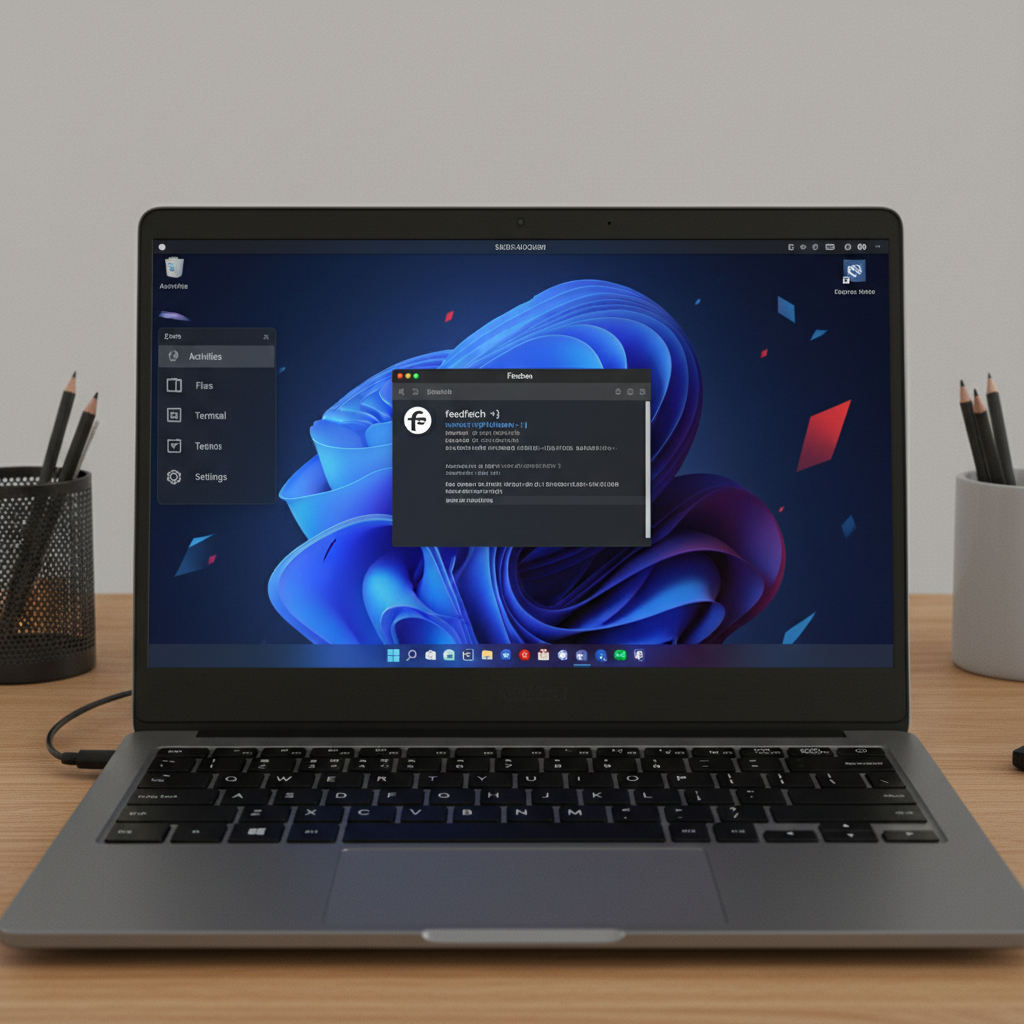

Beyond infrastructure, Linux is increasingly making its presence felt at the edges of computing where the next generation of devices and interfaces is being invented. The Internet of Things — the vast and growing network of connected sensors, appliances, cameras, and industrial controllers that is gradually instrumenting the physical world — runs overwhelmingly on Linux-based firmware because no other operating system offers the combination of stability, security, configurability, and zero licensing cost that deploying millions of devices demands. Raspberry Pi single-board computers, which have become the standard prototyping platform for an entire generation of hardware hackers, educators, and hobbyist engineers, run Linux by default and have introduced millions of people to the idea that a complete, capable computing environment can fit in the palm of your hand and cost less than a dinner out. On the desktop, Valve’s decision to build SteamOS on Linux and release the Steam Deck handheld gaming PC represented the most significant push Linux has ever received in consumer gaming, demonstrating that the compatibility gap with Windows — long the last credible argument against Linux on the desktop — has narrowed to the point where the majority of the Steam library runs on Linux without modification. Each of these developments represents a beachhead in a domain that Linux did not previously dominate, and the pattern they collectively trace is one of steady, irreversible expansion into every corner of the computing landscape.
In Closing
The future that Linux is building toward is one in which the operating system becomes increasingly invisible — not because it has been replaced, but because it has become so fundamental to the fabric of computing that distinguishing it from the infrastructure itself grows difficult. This is a remarkable outcome for a project that began in 1991 as a university student’s personal experiment and grew through the voluntary contributions of programmers who believed that the best software is built in the open and owned by everyone. The values encoded in that founding moment — transparency, collaboration, meritocracy, and the conviction that knowledge shared is more powerful than knowledge hoarded — have proven to be not merely idealistic but strategically correct, producing an operating system that has outlasted and outperformed proprietary alternatives in every environment where reliability and scale matter most. For new Linux enthusiasts standing at the beginning of their journey, this history carries an inspiring implication: the skills you are building, the community you are joining, and the philosophy you are embracing place you in alignment with the direction computing is moving, not against it. Learning Linux today is not learning a niche skill for a minority operating system — it is learning the native language of the infrastructure that the future is being built on, and that is as valuable a technical investment as any person in the modern world can make.
Leave a Reply