
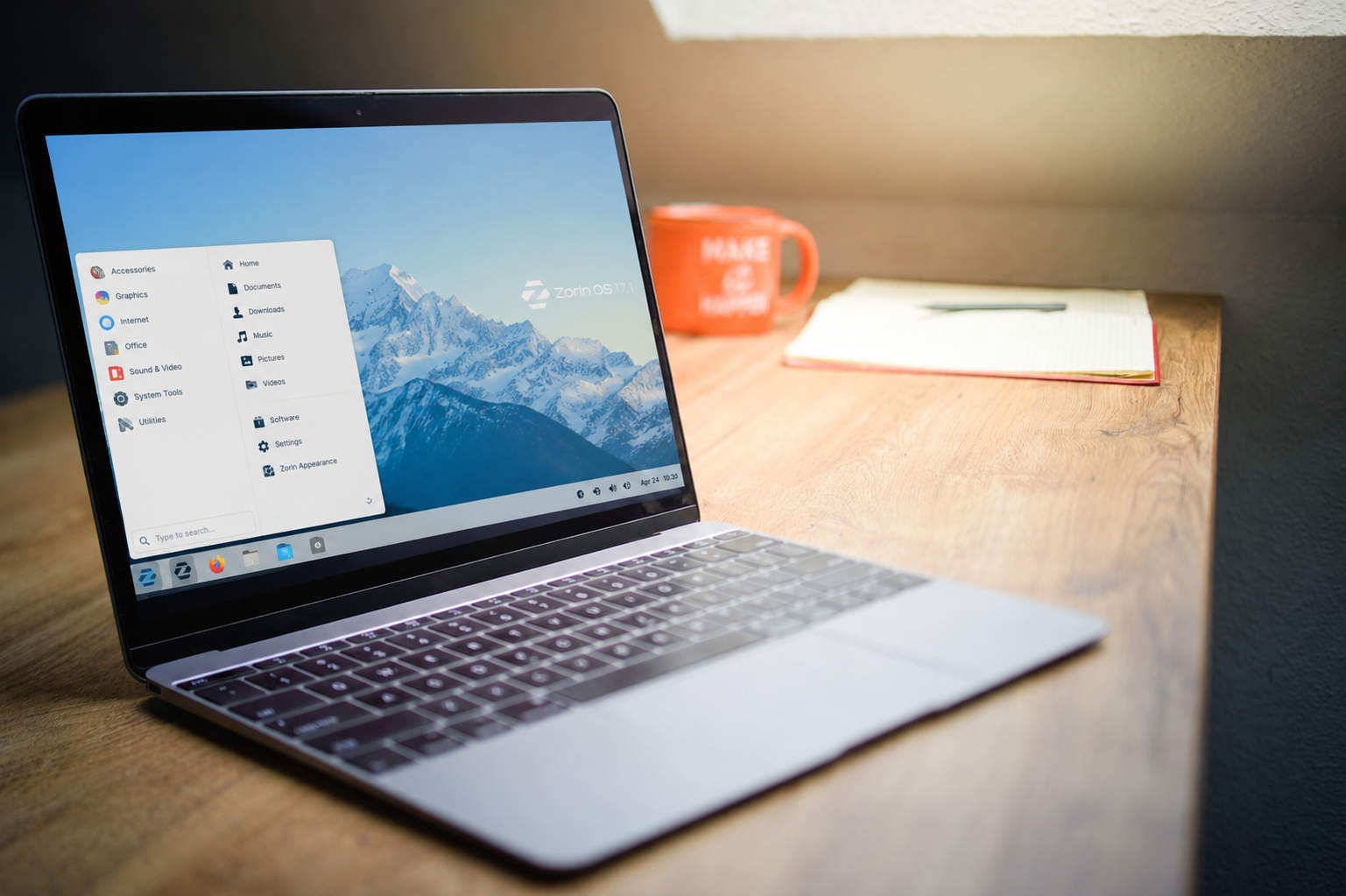
Open source software has quietly become the backbone of modern computing, and many of the most essential tools most people rely on daily are already open source without realizing it. The web browser Firefox remains one of the most important pieces of software ever created under an open license — it kept the web competitive during an era when a single company threatened to control how everyone experienced the internet, and it continues to champion user privacy through features like Enhanced Tracking Protection and a growing library of privacy-focused extensions. For office productivity, LibreOffice is the gold standard, offering a full suite of word processing, spreadsheet, and presentation tools that read and write Microsoft Office formats with reliable compatibility. It runs on Windows, macOS, and Linux equally well, making it the obvious choice for anyone who wants to stop paying for software they use to write documents and build spreadsheets. Rounding out the daily essentials is VLC Media Player, a deceptively humble application that plays virtually every audio and video format ever invented without asking you to install codecs, register an account, or sit through an ad.
Sometimes, the simplest tools to use in Linux, MacOS, or Windows are the ones that don’t cost you a penny. Open source is free to use and oftentimes free as a cost to the user as well.
For anyone who handles images or visual content, GIMP (GNU Image Manipulation Program) is the open source answer to Photoshop — capable of professional-grade photo editing, compositing, and graphic design once you invest time learning its interface. A companion tool worth knowing is Inkscape, a vector graphics editor comparable to Adobe Illustrator, ideal for creating logos, illustrations, and any artwork that needs to scale cleanly to any size. On the video side, Kdenlive and OpenShot both offer surprisingly capable non-linear video editing that would have cost hundreds of dollars in software licenses just a decade ago. These creative tools have matured enormously in recent years and are now genuinely viable for YouTubers, small businesses, and independent creators who need professional output without professional-tier software budgets.

Security and privacy tools represent another category where open source shines brightest, precisely because the code is visible to anyone who wants to audit it — a guarantee no proprietary software can honestly make. KeePassXC is a locally-stored password manager that keeps your credentials in an encrypted file you control entirely, with no cloud subscription required. Bitwarden takes a similar approach but adds convenient cloud sync and a polished mobile experience while remaining fully open source and independently audited. For encrypted communication, Signal uses an open source protocol that security researchers worldwide have scrutinized and validated, making it the most trustworthy messaging app available to ordinary users. And Tor Browser, built on Firefox, routes your traffic through a global network of volunteer-operated relays to provide genuine anonymity for those who need it most — journalists, activists, and anyone living under a government that monitors internet use.
Wrapping Up with Key Insights
Under the hood of nearly everything else sits a category of open source tools that developers and system administrators depend on but general users rarely think about: the infrastructure tools. Git, created by Linus Torvalds, is the version control system that underlies virtually all modern software development and has become the universal language of collaborative coding through platforms like GitHub and GitLab. Python is arguably the most important programming language of the current era — open source, readable, and powerful enough to drive everything from machine learning research to home automation scripts to the tools governments use to process public data. Docker revolutionized how software is packaged and deployed, and while the ecosystem around it has grown complex, the core concept of containerization it popularized has made software more portable and reproducible than ever before. These tools were built in the open, improved by thousands of contributors across decades, and given freely to the world — and that generosity is quietly responsible for most of the technology infrastructure modern life depends on.
Leave a Reply